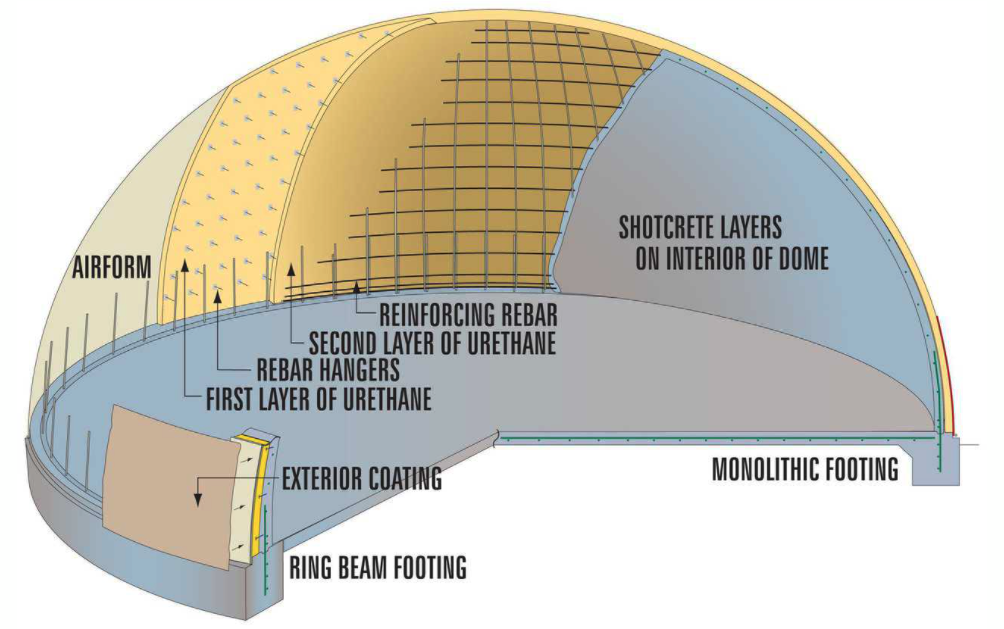
Several layers comprise the monolithic dome construction process. The process begins with a poured concrete footing in the shape of the dome's footprint. A PVC-infused nylon airform is then attached to the outside of the footing and inflated like a baloon. The inflated airform conforms to the shape of the finished home. While the airform is inflated, a 3-inch coat of polyurethane foam is sprayed on the interior of the airform. Rebar is then attached to the polyurethane foam, and shotcrete is sprayed over the rebar. The following illustration depicts these building layers well:
The energy efficiency of monolithic domes is second-to-none. It is not uncommon to obtain effective R-100 insultion values (source), and there is a saying in monolithic construction business that they can be heated with a candle and cooled with an ice cube. In the case of the Olympian multi-dome, there is no air conditioning, and there is no central heating. Three 1500-watt electric fireplaces spread throughout 6500 square feet of living space keeps the interior of the home between 60-70 degrees all months of the year. (heating is turned off during the summer months)
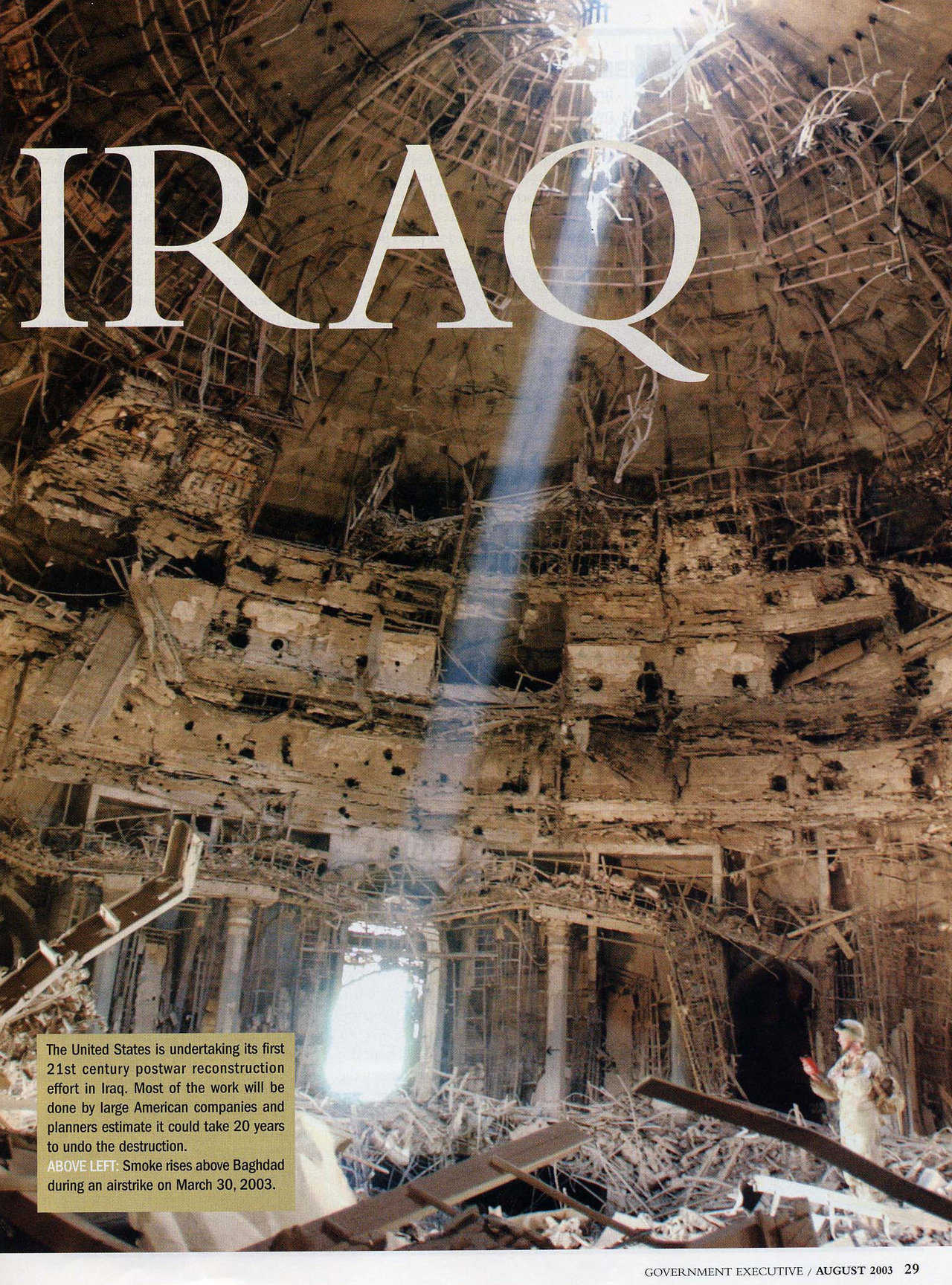
If one is seeking a feeling of safety and security in their home, nothing beats a monolithic dome. The Olympian Multi-Dome is located an hour south of Seattle and should survive a nuclear strike by a hostile country up to 25 miles away. If this claim sounds exaggerated, then consider the monolithic dome mosque that the U.S. leveled an airstrike on during the Iraq War in 2003. A 5000 lb. bomb was dropped squarely on the top center of the dome. The bomb destroyed the interior of the mosque, but the monolithic structure remained standing with the only structural damage being a hole in the roof the size of the bomb. (picture below)